Caffeine calculator
Add drinks and the time you had them. Watch caffeine fade on a 5 hour half-life curve, and compare what you have logged with 400 mg for most healthy adults or 200 mg in pregnancy.
Brewed coffee: 8 fl oz (237 mL), 96 mg (Mayo Clinic). Change the amount if your label says otherwise.
Still in the model now
0mg
Logged so far today
0mg
The half-life used here
Each drink declines on its own clock. Remaining caffeine is the dose times one-half raised to the power of elapsed hours divided by 5. A 100 mg drink is about 50 mg after 5 hours and about 25 mg after 10 hours. A later drink is added on top of what is still there.
EFSA's public summary says the half-life in healthy adults averages about 4 hours, with a range of about 2 to 8 hours. Five hours is inside that range and keeps the chart readable. It will not match a blood test, and clearance can slow later in pregnancy. The pregnancy toggle changes the daily comparison line, not the 5 hour curve.
400 mg, and 200 mg in pregnancy
For most adults, the FDA has cited 400 mg a day, about two to three 12-fluid-ounce cups of coffee, as an amount not generally associated with negative effects. EFSA reached the same habitual 400 mg figure for non-pregnant healthy adults, and said single doses up to 200 mg are generally fine for healthy adults. A single 100 mg dose may still nudge sleep in some people near bedtime.
In pregnancy, the NHS says not to have more than 200 mg of caffeine a day. ACOG and EFSA use the same ceiling. None of these is a promise that a number under the line is perfect for you.
Where the preset amounts come from
Cups are not standard. Mayo Clinic's chart lists 96 mg for 8 ounces of brewed coffee, 63 mg for a 1-ounce espresso, 48 mg for 8 ounces of brewed black tea, and 29 mg for 8 ounces of brewed green tea. The NHS pregnancy page uses round cup and can figures: 100 mg in a cup of instant coffee, 75 mg in a cup of tea, 40 mg in a can of cola, and 80 mg in a 250 mL energy drink. The FDA's 12-ounce table gives ranges rather than one cup. Decaf is typically 2 to 15 mg in 8 ounces; the decaf button here uses 15 mg and says so.
If a label gives a number, use that instead of a preset. The coffee article and the tea article cover whether those drinks count as water. Fluid volume is a different calculator: the water intake calculator.
FAQ
For general information only. Not a substitute for advice from a qualified health professional.
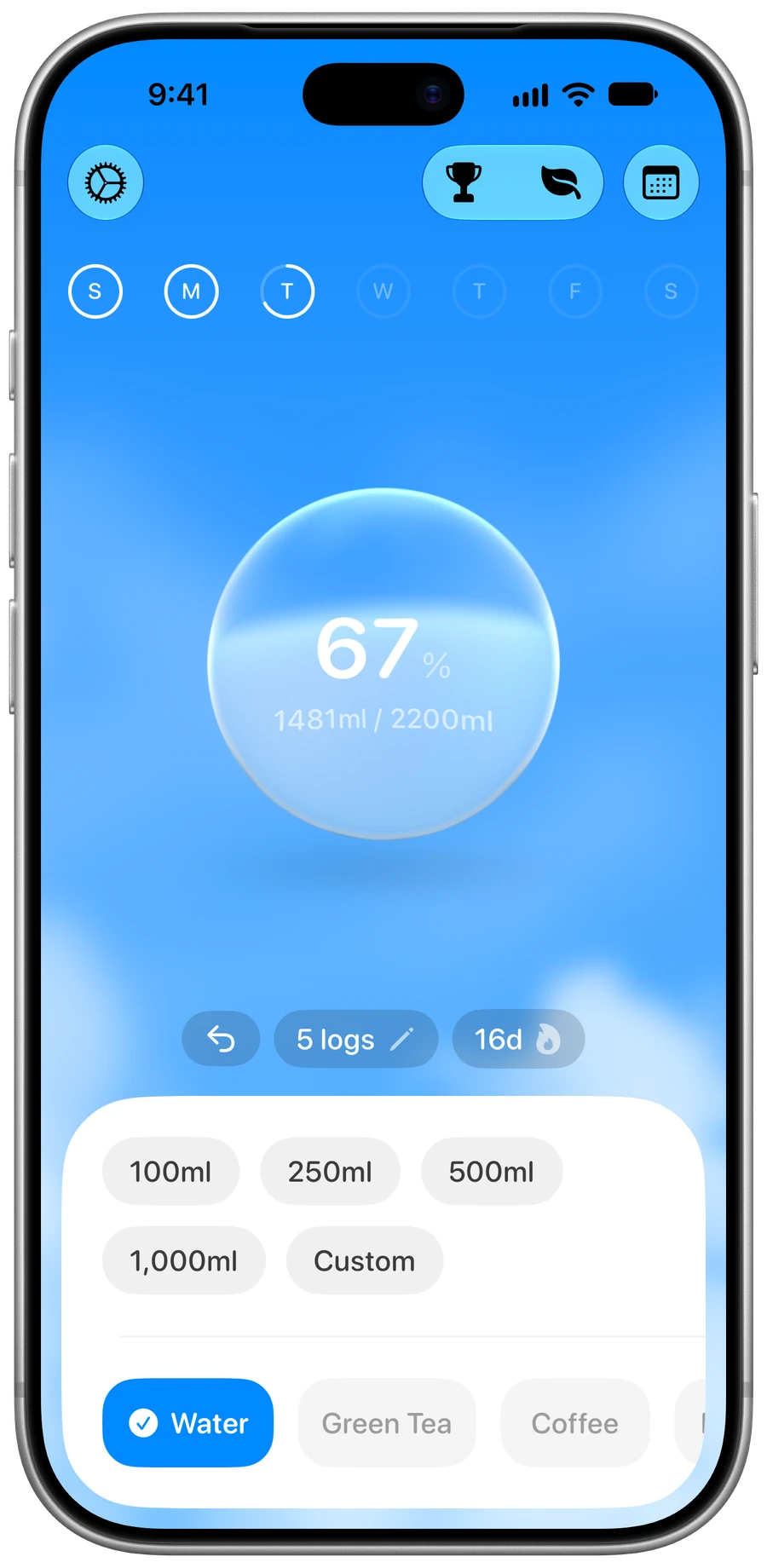
See the day's caffeine in Nami
Nami adds up caffeine from the drinks you log and keeps it next to the water total, with a garden that grows as awards unlock. Free to download, with optional Pro.