Does tea dehydrate you?
Does tea dehydrate you, and does tea count as water intake? How black, green, and decaf tea fit into a friendly daily fluid picture.
· 6 min read · Preet Mishra
In short
A usual cup of tea is mostly water, and it still counts toward your drinks for the day. The caffeine dose is usually smaller than coffee, so the old dehydrate myth is even quieter here.
Tea is almost all water, with less caffeine than a typical coffee. UK and US guidance still counts a usual cup as fluid. A trial that handed men a liter of hot or iced tea did not find more urine than after still water. You still get some caffeine, and pregnancy has its own daily caffeine budget, but the “tea dehydrates you” line does not hold up for everyday sipping.
Does tea count as water intake?
Yes. The NHS says 6 to 8 cups or glasses of fluid a day and names tea alongside water, lower-fat milk, and coffee (NHS, water, drinks and hydration). It does not subtract a caffeine penalty. It does suggest keeping caffeine moderate overall.
Mayo Clinic answers “is water the only option?” with a clear no. Tea and coffee help keep you hydrated and count toward the day. The CDC lists plain tea with plain coffee and sparkling water as a low-calorie drink choice.
The National Academies looked at caffeine as a diuretic and did not find convincing evidence of a running deficit in total body water. Their summary says the effect may be temporary, and that caffeinated beverages can contribute as much as non-caffeinated ones (National Academies). Tea sits inside that sentence. So does coffee. The coffee-specific trial is in does coffee dehydrate you.
“Counts” means the water in the cup is part of fluid intake. It does not mean a sugary bottled iced tea is a free pass. Unsweetened brew and a sweet bottled tea are both wet. Only one fits the advice to keep sugar lighter.
What a liter of tea did in a trial
The beverage hydration index study gave 72 already-hydrated, fasted men a liter of a test drink over 30 minutes and collected urine for four hours. Hot tea and iced tea were both on the list. Cumulative urine after either tea looked like the urine after still water. Coffee, cola, diet cola, sparkling water, orange juice, lager, and a sports drink landed in the same “not different from water” group. Milk and an oral rehydration solution were the drinks that held more water (Maughan and colleagues, 2016).
A liter of tea is several cups, drunk quickly, by men who were not short of fluid. It is a strong test of the “tea makes you lose the water” claim, and the claim did not show up. It is not a study of every shelf tea, of women, of children, or of people already behind on fluid. The ranking of the other drinks is in most hydrating drinks.
How much caffeine is in the cup?
The dehydrate argument only works if the caffeine dose is big enough to matter. Published cup sizes disagree, so the honest answer is a range with the serving attached.
Mayo Clinic’s chart lists about 48 mg in 8 ounces (237 mL) of brewed black tea, about 29 mg in 8 ounces of brewed green tea, about 26 mg in 8 ounces of ready-to-drink bottled black tea, and about 2 mg in 8 ounces of brewed decaf black tea. The NHS, talking about pregnancy, uses about 75 mg for a cup of tea and gives black or green as the example. The FDA’s table is for 12 fluid ounces and lists 71 mg for black tea and 37 mg for green tea (FDA).
Those figures can all describe different cups. A longer brew, a bigger mug, and a stronger leaf all move the number up. The NHS 75 mg cup and the Mayo 48 mg cup are not a puzzle to average into false precision. They are two published examples. The caffeine calculator includes both as presets and lets you type the amount on a label.
Tea is usually the smaller dose next to coffee. Mayo’s 8-ounce brewed coffee is about 96 mg, against 48 mg for black tea. Four NHS-sized cups at 75 mg are 300 mg before any coffee. The FDA and EFSA both describe up to 400 mg a day for most healthy non-pregnant adults. A morning pot is not gone by afternoon. EFSA puts the average half-life at about 4 hours, with a range of about 2 to 8. The calculator draws 5 hours. Remaining caffeine is not a fluid deficit.
Black, green, herbal, and decaf
Black and green tea both contain caffeine. Green is often lower per cup in the charts above, not caffeine-free. Herbal infusions that are not made from the tea plant are a different case. Many are caffeine-free, and the water in them counts the way other caffeine-free drinks count. In pregnancy, herbal teas get their own gentle caution for a separate reason: there is not much research on many of them, so the NHS suggests keeping herbal teas such as peppermint or chamomile to about 4 cups a day and skipping ones with liquorice root. That limit is about pregnancy uncertainty, not dehydration.
Decaf tea still has a little caffeine. Mayo Clinic lists about 2 mg in 8 ounces of brewed decaf black tea. The water is unchanged. The diuretic question gets quieter as the caffeine gets smaller. People who react badly to small doses may still prefer to skip it.
Pregnancy and kids
Pregnancy is where tea’s caffeine stops being a footnote. The NHS limit is 200 mg of caffeine a day. At the NHS estimate of 75 mg a cup, two cups are 150 mg and three are 225 mg, over the line, before coffee, cola, or chocolate. The same page lists less than 25 mg in 50 g of plain dark chocolate and about 40 mg in a can of cola, which is how a tea habit plus a snack can cross 200 mg without a single coffee.
Fluid needs can rise in pregnancy at the same time. The NHS says you may need more than 6 to 8 drinks if you are pregnant or breastfeeding. Tea can be part of that fluid and still has to fit under the caffeine ceiling. Water and milk do not spend the caffeine budget.
Caffeine drinks are a no under age 2 on FDA guidance. This page is about adult tea.
Checking it against your own days
Pale urine and no nagging thirst is the everyday picture of enough fluid. Dark urine after strong tea and almost nothing else is a day that needed more water, even if the tea did not cancel itself. Heat and exercise call for more fluid, not for dropping tea from the list of drinks that count.
If you already feel wiped out and short on fluid, plain water is the friendlier catch-up drink until you feel better. More on that in how to rehydrate fast.
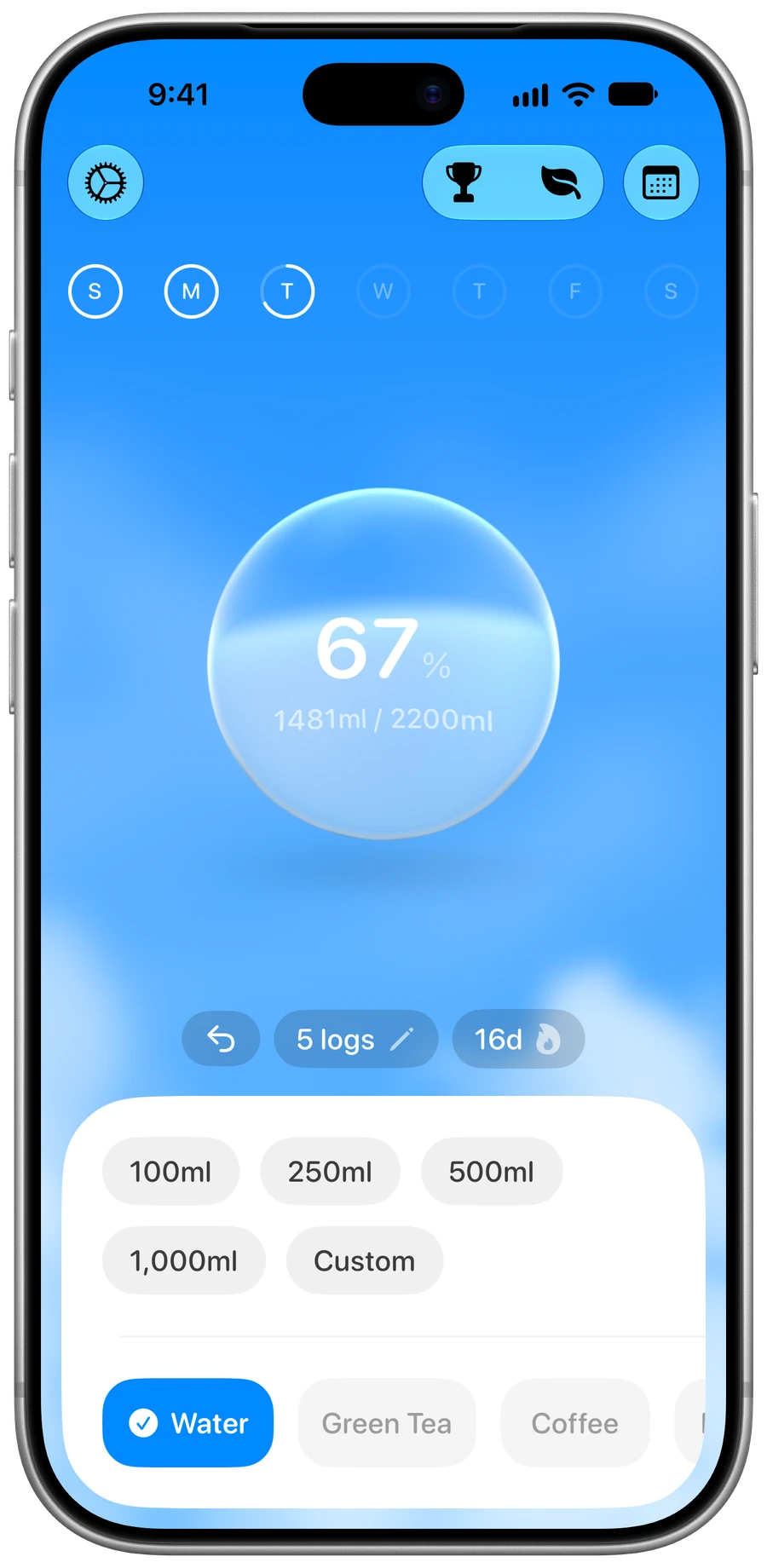
On iPhone, Nami logs tea, applies a hydration percent, and adds the caffeine to the day. That percent is the app’s serving rule, not the Maughan urine result. The water intake calculator is the separate estimate from published adequate intakes.
FAQ
Does tea dehydrate you?
A usual cup does not erase its own water. The NHS counts tea toward 6 to 8 drinks a day. The National Academies found no convincing evidence of a cumulative body-water deficit from caffeine. A liter of hot or iced tea did not produce more urine than still water in men who were already hydrated. If you are already short on fluid, water is the better catch-up drink.
Does tea count as water intake?
Yes. The NHS names tea with water, milk, and coffee. Mayo Clinic and the CDC include tea in daily fluid. Unsweetened tea is the version that also fits the advice to limit sugar.
Does green tea dehydrate you more or less than black tea?
Green tea is usually lower in caffeine. Mayo Clinic lists about 29 mg in 8 ounces of green tea and about 48 mg of black tea. The NHS uses about 75 mg for a cup and includes both. Less caffeine is a quieter diuretic question, not a different fluid rule.
Does decaf tea dehydrate you?
Mayo Clinic lists about 2 mg in 8 ounces of brewed decaf black tea. The water remains. Nothing here shows those few milligrams dehydrating you. Decaf is not zero caffeine.
How much tea is too much caffeine?
The FDA and EFSA describe up to 400 mg a day for most healthy adults. In pregnancy the NHS and EFSA use 200 mg. At the NHS estimate of 75 mg a cup, three cups are 225 mg. Mayo’s 48 mg for 8 ounces takes more cups to reach the same total. Add coffee, cola, and chocolate before blaming the teapot alone.
For general information only. Not a substitute for advice from a qualified health professional.
- #tea
- #caffeine
- #hydration
- #coffee
Log the drinks in Nami
Nami is a water and caffeine tracker for iPhone. Each drink counts as a set percent toward the day, and the caffeine total sits beside it. Free to download, with optional Pro.