How to rehydrate fast
How to rehydrate fast after heat, exercise, or a rough day, including when water is enough and when an electrolyte or oral rehydration drink helps.
· 5 min read · Preet Mishra
In short
There is no magic minute timer for catching up on fluid. Sip steadily, match the drink to what you lost, and let pale urine and feeling better tell you that you are back.
Nobody publishes a stopwatch for “you are hydrated again.” What they do share is practical: what to drink, how to sip when your stomach is unsettled, and which everyday signs mean you are catching up. Plain water covers ordinary thirst, heat, and sweat. Vomiting and diarrhea take salts with the water, which is why oral rehydration solution exists.
What rehydrating actually is
Dehydration is a simple imbalance: more fluid left than came in. Replacing it means drinking until that gap closes, not hitting a universal clock. Everyday signs of being behind include thirst, a dull headache, dark yellow pee, peeing less often, light-headedness, tiredness, and a dry mouth. The friendly fix for those ordinary days is more fluid.
The body asks for more water in hot weather, during harder activity, with a fever, and when you are losing fluid through the gut. None of those situations comes with a published countdown.
A daily adequate intake is also the wrong target for a deficit. The National Academies’ figures, about 3.7 liters of total water for men and 2.7 liters for women, describe an ordinary day, not the extra needed to catch up after a loss. EFSA’s 2.5 and 2.0 liters are the same kind of everyday figure. The water intake calculator scales those everyday numbers. It does not calculate how far behind you are this afternoon.
If your stomach is unsettled, drink slowly
When you feel sick or have been sick, small sips beat a chug. Large amounts at once are harder to keep down. Skip the extra coffee, energy drink, or alcohol until you feel more like yourself. Caffeine and alcohol are fine on ordinary hydrated days for most people; they are just not the best catch-up tools when you are already short.
That caffeine note is about the day you are behind. It is not a claim that a usual cup of coffee dehydrates someone who is otherwise drinking enough. The everyday coffee story is in does coffee dehydrate you. While you are catching up, water or a light diluted squash is the simpler choice.
Pale pee is a practical check for whether the day has included enough. Kids under 5 and older adults need a bit more attention because they can fall behind faster.
When the loss is sweat or heat
Sweat is water and a little salt. For a usual workout or a hot afternoon, start with water. Drink a bit before, during, and after activity that makes you sweat, and drink more when the weather is hot or humid. Extra fluid after a sweaty session is ordinary good sense, not a special protocol.
Very active people in continual heat can need a lot more than a desk-day total. The National Academies mentioned 6 liters or more of total water a day in that heavy ongoing-loss picture. That describes hard work in heat, not a warm walk.
A sports drink did not beat still water for retention in already hydrated men who drank a liter at rest (Maughan and colleagues, 2016). Many sports drinks also bring sugar. For ordinary sweat, water is still the first pour. How milk, tea, cola, and oral rehydration solution compared in that trial is in most hydrating drinks.
When the loss is through the gut
This is the case where water alone can feel incomplete. Fluid leaving through vomit or diarrhea takes sodium, potassium, and other salts with it, and the gut may not absorb plain water as easily. An oral rehydration solution from a pharmacy is built for that job: sugar and salts in a ratio that helps water come along for the ride.
The reduced-osmolarity formula used in WHO guidance supplies, per liter, 75 mmol of glucose and 75 mmol of sodium, plus potassium, chloride, and citrate, at 245 mOsm/L. In grams per liter that is about 13.5 g glucose, 2.6 g sodium chloride, 1.5 g potassium chloride, and 2.9 g trisodium citrate dihydrate. Those numbers describe a prepared medicine, not a kitchen recipe. Getting the ratio wrong matters, especially for a child. Ask a pharmacist which product fits.
For babies, keep the usual milk feeds. Do not weaken formula, and skip fruit juice or fizzy drinks, which can make gut losses worse. Extra water for a baby under 6 months should be boiled, then cooled.
Oral rehydration solution is for catching up after gut losses. It is not a daily upgrade on water for a healthy person with ordinary thirst.
What “fast” can and cannot mean
There is no published minute count after which you are rehydrated. Pale urine, thirst settling, and feeling clearer are the checks that matter. Chugging liters in a few minutes fights the advice for nausea, and in athletes it is the pattern linked with low blood sodium when people overdrink around long exercise. If fluid will not stay down, or you feel confused, unusually sleepy, or seriously unwell, get help rather than waiting on another glass. Alcohol works the other way: too much of it is a classic path into dehydration, and it is a poor catch-up drink.
After you have caught up
Once you feel better, drink through the day and drink more in heat, long activity, and illness. Water or a well-diluted sugar-free squash covers most days. Food supplies a share of water that does not come from the glass. Mayo Clinic puts that share at about 20 percent, in line with the National Academies.
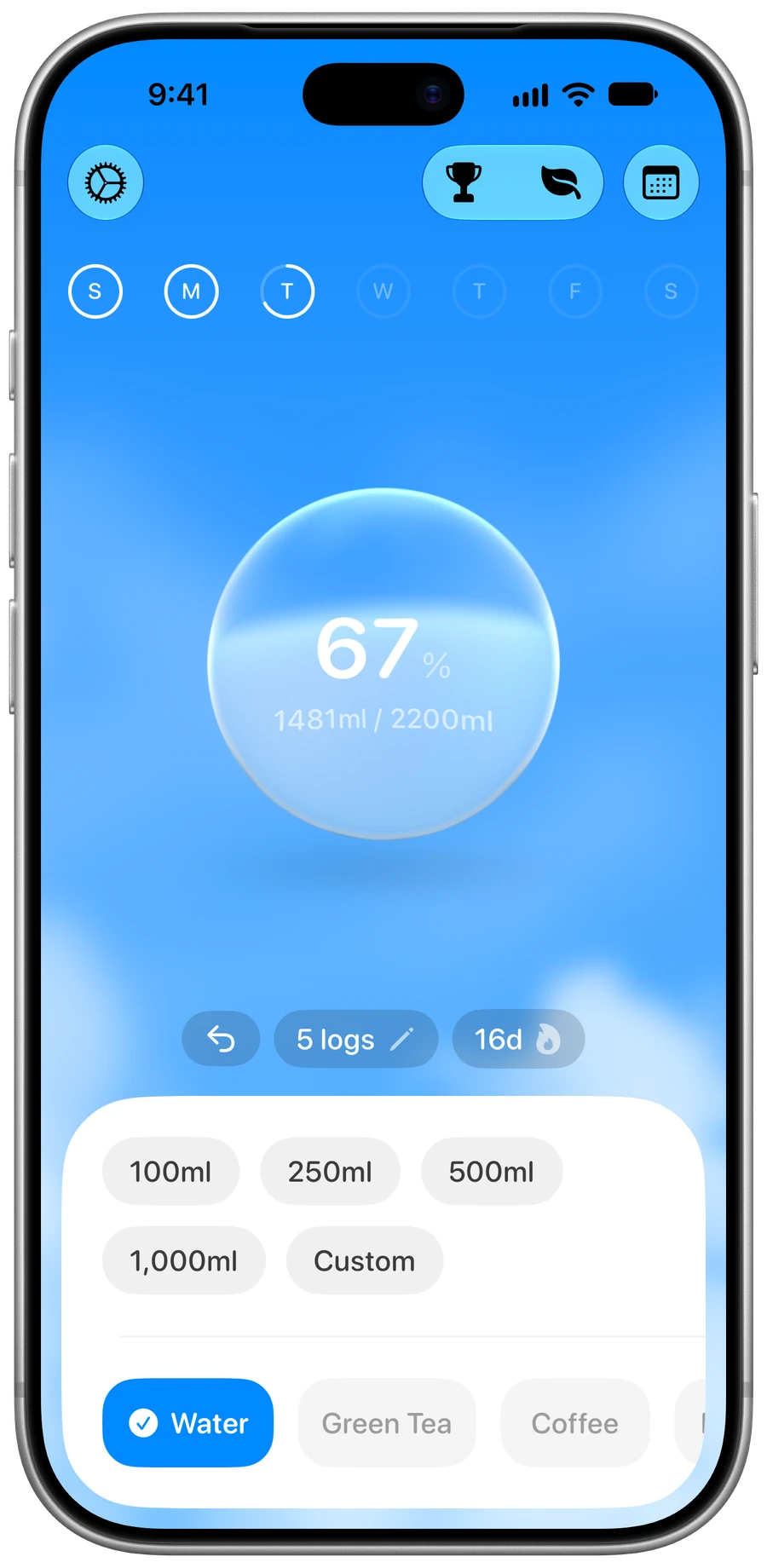
If the pattern keeps repeating, a log of volume and time beats a guess at the end of the week. Nami records drinks and a hydration percent for each one. That is a record of what you logged, not a lab measure of whether a deficit has closed. Feeling better still outranks any number in an app.
Coffee and tea can return to the rotation once you are caught up. On ordinary days they count as fluid. That split is in the coffee and tea articles. Caffeine timing is a separate question for the caffeine calculator.
FAQ
How to rehydrate fast after a hot day or a workout?
Drink water. Extra fluid after sweaty activity is the usual advice, and more in the heat. No page here gives a minute count. Pale urine and thirst settling are the checks. Get help if you feel confused, unusually drowsy, or seriously unwell.
Do I need an electrolyte drink?
For ordinary sweat, water comes first. A sports drink did not beat still water in a trial of already hydrated men. For vomiting or diarrhea, an oral rehydration solution from a pharmacist replaces sugar and salts. That is not the same as a sweet sports drink.
What is in an oral rehydration solution?
The WHO reduced-osmolarity formula, per liter, is 75 mmol glucose, 75 mmol sodium, 65 mmol chloride, 20 mmol potassium, and 10 mmol citrate. Use a prepared product and the packet. Do not invent a kitchen ratio from this page, especially for a child.
Can I rehydrate with coffee or tea?
Not while you are already short on fluid. Water is the friendlier catch-up drink then. On an ordinary day, tea and coffee do count. That split is in the coffee and tea articles.
How do I know it worked?
Symptoms ease and urine is pale rather than dark. There is no clock. If you feel unusually wiped out, dizzy when you stand, or much less urine shows up, pause the DIY approach and get help.
For general information only. Not a substitute for advice from a qualified health professional.
- #rehydration
- #electrolytes
- #dehydration
- #hydration
Log the drinks in Nami
Nami is a water and caffeine tracker for iPhone. Each drink counts as a set percent toward the day, and the caffeine total sits beside it. Free to download, with optional Pro.