Does coffee dehydrate you?
Does coffee dehydrate you, does caffeine dehydrate you, and does decaf dehydrate you? A friendly look at whether coffee counts toward your water for the day.
· 6 min read · Preet Mishra
In short
Your morning coffee is mostly water, and for regular drinkers it still counts toward the day's fluid. A little caffeine left in decaf does not flip that story.
Coffee is water with a pleasant jolt. The old myth says the caffeine cancels the glass. For people who already drink coffee, the research that actually measured body water says otherwise. Your mug still helps the day's total, and public guidance in the UK and the US treats it that way.
The short answer
If you drink coffee regularly, a few cups across a normal day do not dry you out. They add fluid. Caffeine can nudge you to the bathroom for a bit, especially if you rarely have it, but that short bump is not the same as finishing the day short on water.
Want the caffeine side of the story? Use the caffeine calculator. Want a ballpark for drinks for the day? Try the water intake calculator.
Why the myth sticks around
Caffeine is a mild diuretic in some situations. One strong cup after a long stretch without caffeine can feel like it. People notice the bathroom trip and forget the 200-plus milliliters of water that came with it. Over a full day, in habitual drinkers, that trade does not leave you behind.
The National Academies reviewed the caffeine-and-water worry when they set US and Canadian water intakes. Their summary: any diuretic effect looks temporary, and there is no convincing evidence that caffeine creates a running deficit in total body water. Caffeinated drinks can contribute as much as non-caffeinated ones toward daily hydration (National Academies).
Those adequate intakes are about 3.7 liters of total water a day for men and 2.7 liters for women, from drinks and food together. Roughly 80 percent comes from beverages. Mayo Clinic counts tea, coffee, and milk toward the day. The CDC lists plain coffee among low-calorie drink choices and mentions up to 400 mg of caffeine a day for most adults.
What happened when researchers compared coffee with water
A 2014 crossover study put the everyday question on a scale. Fifty men who already drank three to six cups a day completed two three-day stretches. In one they had four 200 mL mugs of black coffee a day (about 4 mg of caffeine per kilogram of body weight). In the other they had the same volume of water. Food, other fluid, and activity were controlled. Researchers measured total body water, blood markers, urine volume, urine concentration, and body mass (Killer, Blannin, and Jeukendrup, 2014).
Total body water matched. Twenty-four-hour urine volume was about 2.4 liters either way. Concentration markers and body mass did not differ. Urinary sodium ticked a little higher with coffee. Moderate coffee, in men already used to it, hydrated much like water.
The design was narrow on purpose: men, habitual drinkers, four measured mugs, three days. Another trial gave 72 already-hydrated men a liter of coffee and did not see more urine than after still water (Maughan and colleagues, 2016). How other drinks ranked in that test lives in most hydrating drinks.
Does coffee count as water intake?
Yes on an ordinary day. The NHS points to 6 to 8 cups or glasses of fluid and names water, lower-fat milk, and lower-sugar drinks, including tea and coffee (NHS, water, drinks and hydration). Mayo Clinic says the same thing about tea and coffee counting.
A sugary latte is still fluid, and it is still a sugary drink. Keep the syrup treats occasional if that matters to you. One practical exception: if you already feel wiped out from heat, illness, or a long sweaty day, plain water (or an oral rehydration drink when you are replacing salts) is the friendlier catch-up drink. Coffee can wait until you feel like yourself again. More on that in how to rehydrate fast.
What if you almost never drink coffee?
Habitual drinkers were the people in the coffee-versus-water trial. If caffeine is rare for you, one strong cup can feel louder in the bathroom. That still does not prove you end the day with less body water once you count the fluid in the cup. Just do not stretch “same as water” to a first espresso or a huge late-night dose.
For caffeine itself, the FDA has cited 400 mg a day as an amount not generally associated with negative effects for most adults, and EFSA uses the same figure for healthy non-pregnant adults. Those are caffeine guardrails, not fluid rules. Mayo Clinic lists about 96 mg in 8 ounces of brewed coffee and about 63 mg in a 1-ounce espresso. The FDA’s 12-ounce range for regular brewed coffee is 113 to 247 mg. The caffeine calculator stacks those amounts by time. It does not judge whether the water counted.
Does decaf dehydrate you?
Decaf is coffee with most of the caffeine removed, not every last milligram. The FDA says an 8-fluid-ounce cup typically has 2 to 15 mg, and “decaffeinated” does not mean caffeine-free. Mayo Clinic’s chart lists about 1 mg for 8 ounces of brewed decaf and about 2 mg for instant decaf. Cups and brands disagree; both say the leftover is tiny next to a regular mug.
Nothing in those numbers says decaf pulls body water down. The water is still water. People who react to tiny doses of caffeine may still prefer to skip it. Tea raises the same fluid question at a lower caffeine dose. That story is in does tea dehydrate you.
Pregnancy, kids, and two separate dials
Pregnancy changes the caffeine conversation more than the fluid one. The NHS suggests staying under 200 mg of caffeine a day, with about 100 mg in a cup of instant coffee and more in filter or shop drinks. Fluid needs can rise when you are pregnant or breastfeeding, and the NHS says you may want more than the usual 6 to 8 drinks. Coffee can still be part of that fluid total while you keep an eye on the caffeine budget.
Caffeine drinks are a no for kids under 2 on FDA guidance. This page is about adult coffee habits.
A simple way to check your own days
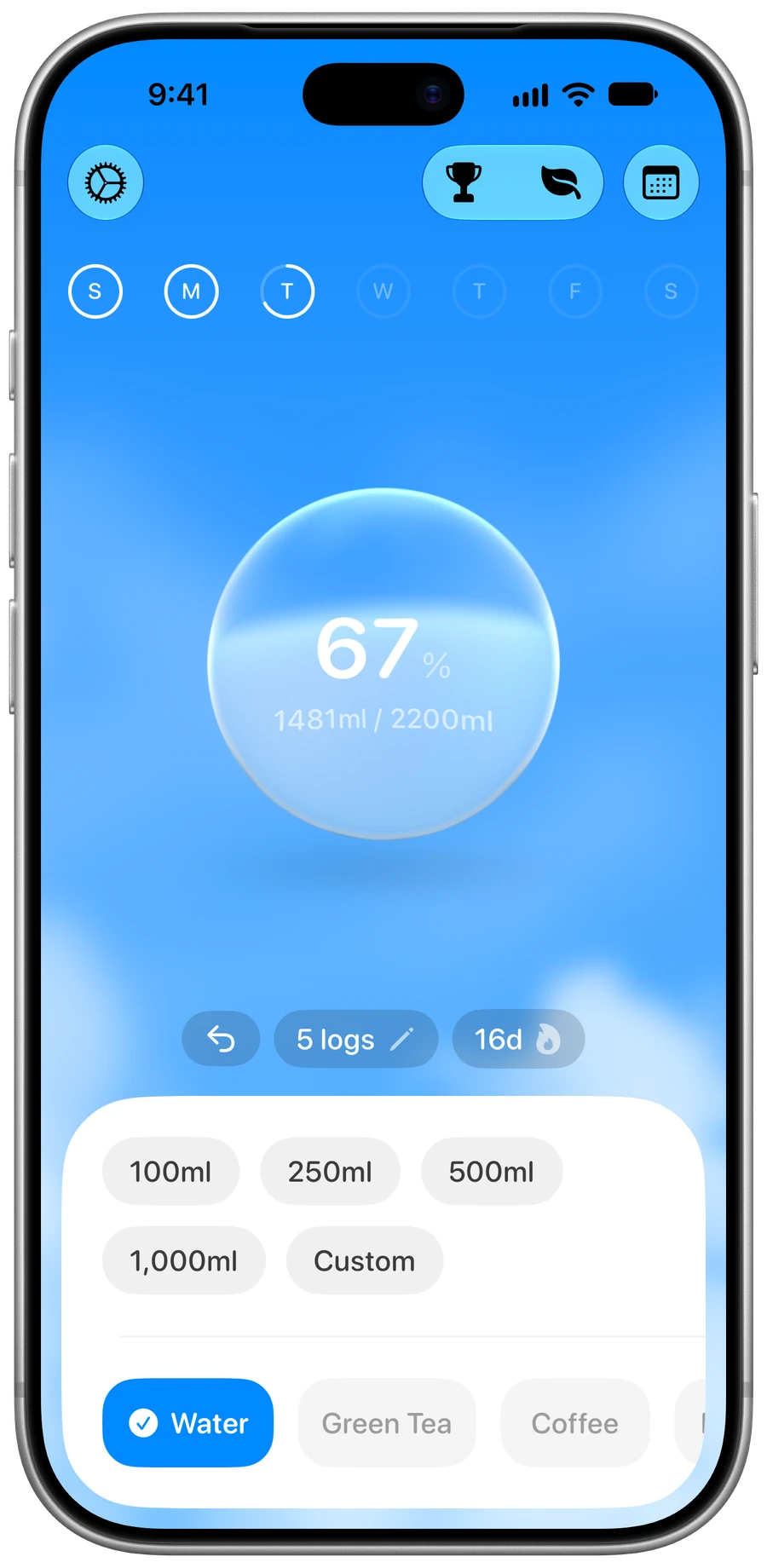
Notice volume, whether coffee was your only drink for hours, and whether your urine later looks pale yellow. That everyday check beats any myth. On iPhone, Nami logs the drink, applies a hydration percent, and keeps a caffeine total beside it. That percent is serving math for the day you logged, not a lab reading of body water.
FAQ
Does coffee dehydrate you?
Not for people who already drink it, in the trial that measured this. Fifty habitual male coffee drinkers showed no difference in total body water or 24-hour urine between four mugs of coffee and the same volume of water. The National Academies found no convincing evidence of a cumulative body-water deficit from caffeine. If you are already wiped out and short on fluid, water is the better catch-up drink.
Does caffeine dehydrate you?
It can increase urine for a while, more so if you rarely have it. That short effect is not the same as a running deficit in total body water. Pregnancy caffeine limits are about pregnancy, not about “drying out.”
Is coffee dehydrating if I only drink one cup?
An 8-ounce brewed coffee is about 96 mg of caffeine on Mayo Clinic’s chart, well under the 400 mg a day figure for most adults, and the water in the cup counts. One cup does not cover the rest of your day. It is also not the best first drink when you already feel dehydrated.
Does decaf dehydrate you?
Decaf still has a little caffeine, often 2 to 15 mg in 8 ounces. The water still counts. Nothing here shows that remainder dehydrating you. Skip it if even small doses bother you.
Does coffee count as water intake?
Yes. The NHS includes coffee in the 6 to 8 cups or glasses of fluid a day. Mayo Clinic counts it toward daily fluid. The National Academies included caffeinated drinks in the beverages that supply most of total water. A sugary coffee still counts as fluid and still counts as a sugary drink.
For general information only. Not a substitute for advice from a qualified health professional.
- #coffee
- #caffeine
- #hydration
- #decaf
Log the drinks in Nami
Nami is a water and caffeine tracker for iPhone. Each drink counts as a set percent toward the day, and the caffeine total sits beside it. Free to download, with optional Pro.